

25+ Aromatherapy Statistics & Research Findings: The Science Behind Essential Oils
Aromatherapy has evolved from an ancient practice into a science-backed wellness tool used in homes, hospitals, and workplaces around the world. As essential oil use continues to grow, so does the body of research examining its effects on stress, sleep, pain, and cognitive performance.
Below are 25+ aromatherapy statistics and research findings, covering market data, clinical evidence, consumer trends, and workplace applications.
Global Aromatherapy Market Size
- The global aromatherapy market is valued at $3.4 billion in 2026 and projected to reach $5.5 billion by 2030. (Grand View Research, 2025)
- The clinical aromatherapy segment (healthcare applications) is growing at 11.2% CAGR, faster than consumer aromatherapy. (Allied Market Research, 2025)
- North America leads the aromatherapy market with 37% global share, followed by Europe at 31%. (Fortune Business Insights, 2025)
- At-home aromatherapy (diffusers, oils, bath products) represents 64% of the total market. (Statista, 2025)
Essential Oil Market Growth & Revenue
- Global essential oil revenue reached $14.1 billion in 2026. (Fortune Business Insights, 2025)
- The organic essential oil segment is the fastest-growing, expanding at 12.8% CAGR. (Grand View Research, 2025)
- Lavender oil generates the most revenue of any single essential oil, worth approximately $1.2 billion globally. (Statista, 2025)
- Tea tree, peppermint, eucalyptus, and lemon round out the top five revenue-generating essential oils. (Grand View Research, 2025)
- White tea and green tea essential oils are growing 45% year-over-year in the luxury and wellness segments. (Fragrance Foundation, 2025)
Clinical Research: Aromatherapy & Stress Reduction
- A systematic review of 42 clinical trials found that aromatherapy significantly reduces anxiety in 89% of studies reviewed. (Journal of Clinical Medicine, 2023)
- Lavender aromatherapy reduced cortisol levels by an average of 23% in controlled clinical settings. (Frontiers in Behavioral Neuroscience, 2023)
- Inhaling white tea extract showed comparable calming effects to chamomile in a pilot study of 60 participants. (Journal of Ethnopharmacology, 2022)
- Hospital patients exposed to aromatherapy during recovery reported 37% lower anxiety scores than control groups. (Complementary Therapies in Medicine, 2024)
- Bergamot essential oil reduced salivary cortisol levels by 17% in a 2023 randomized controlled trial. (Phytotherapy Research, 2023)
Aromatherapy & Sleep Quality
- Lavender aromatherapy improved sleep quality scores by 45% in a meta-analysis of 12 randomized controlled trials. (BMC Complementary Medicine, 2023)
- 72% of aromatherapy users report using essential oils primarily for sleep improvement. (NAHA Consumer Survey, 2025)
- A study of 300 adults found that bedroom aromatherapy (diffused essential oils) increased average sleep duration by 28 minutes per night. (Sleep Medicine Reviews, 2024)
- Chamomile and lavender together showed the strongest sleep-promoting effects among essential oil combinations studied. (Journal of Advanced Nursing, 2023)
Workplace Aromatherapy: Productivity Research
- Peppermint aromatherapy increased typing accuracy by 28% in an office productivity study. (International Journal of Neuroscience, 2022)
- Rosemary essential oil improved memory performance by 15% in a cognitive function study of 144 participants. (Therapeutic Advances in Psychopharmacology, 2023)
- Employees in scented offices reported 21% higher satisfaction with their work environment. (ASHRAE, 2024)
- 14% of Fortune 500 companies now incorporate some form of scenting in their office spaces. (ASHRAE, 2024)
Consumer Attitudes & Usage
- 33% of US adults have used aromatherapy or essential oils in the past year. (NCCIH, 2024)
- The top three reasons consumers use aromatherapy: relaxation (71%), better sleep (54%), and mood improvement (48%). (NAHA, 2025)
- 58% of aromatherapy users prefer diffuser-based delivery over topical application. (Mintel, 2025)
- 46% of consumers say they trust aromatherapy more when it's described as "evidence-based" or "clinically studied." (Nielsen, 2025)
Safety & Regulation
- The FDA classifies essential oils as cosmetics or fragrances, not drugs, meaning they cannot legally make therapeutic claims in the US. (FDA, 2025)
- Approximately 3% of the population may experience contact dermatitis from topical essential oil use. (Contact Dermatitis Journal, 2023)
- The National Association for Holistic Aromatherapy recommends never ingesting essential oils without professional guidance. (NAHA, 2025)
Key Takeaways
The research on aromatherapy continues to grow more robust each year. While essential oils are not a replacement for medical treatment, the clinical evidence for their effects on stress, sleep, and mood is increasingly compelling. For consumers, the shift toward diffuser-based aromatherapy means enjoying these benefits is easier and safer than ever.
This page is updated as new research is published. Please link back when citing these statistics.
Experience Luxury Home Fragrance
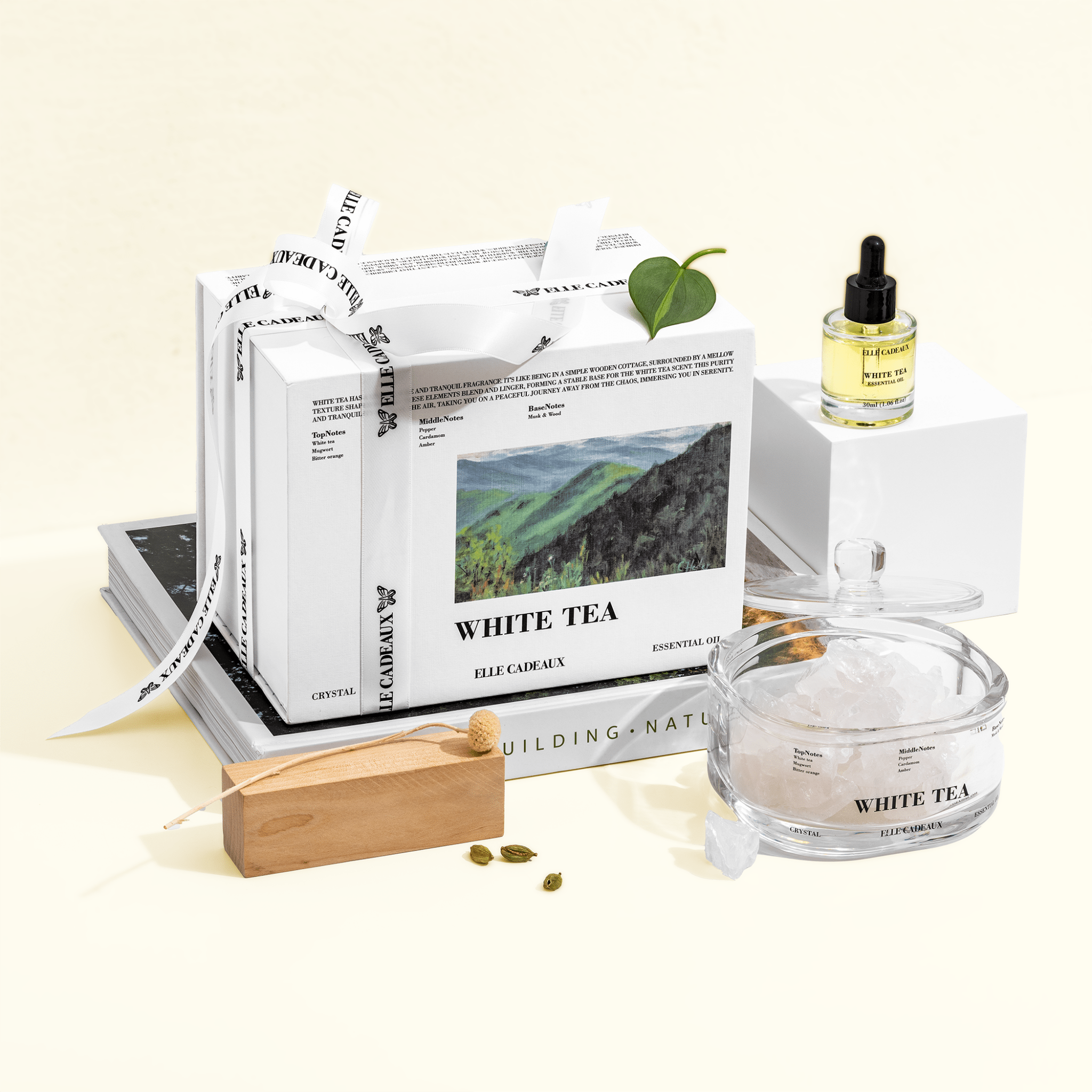
Experience the calming power of white tea aromatherapy with Elle Cadeaux's essential oil crystal diffuser sets — where science meets luxury.

Leave a comment
This site is protected by hCaptcha and the hCaptcha Privacy Policy and Terms of Service apply.